

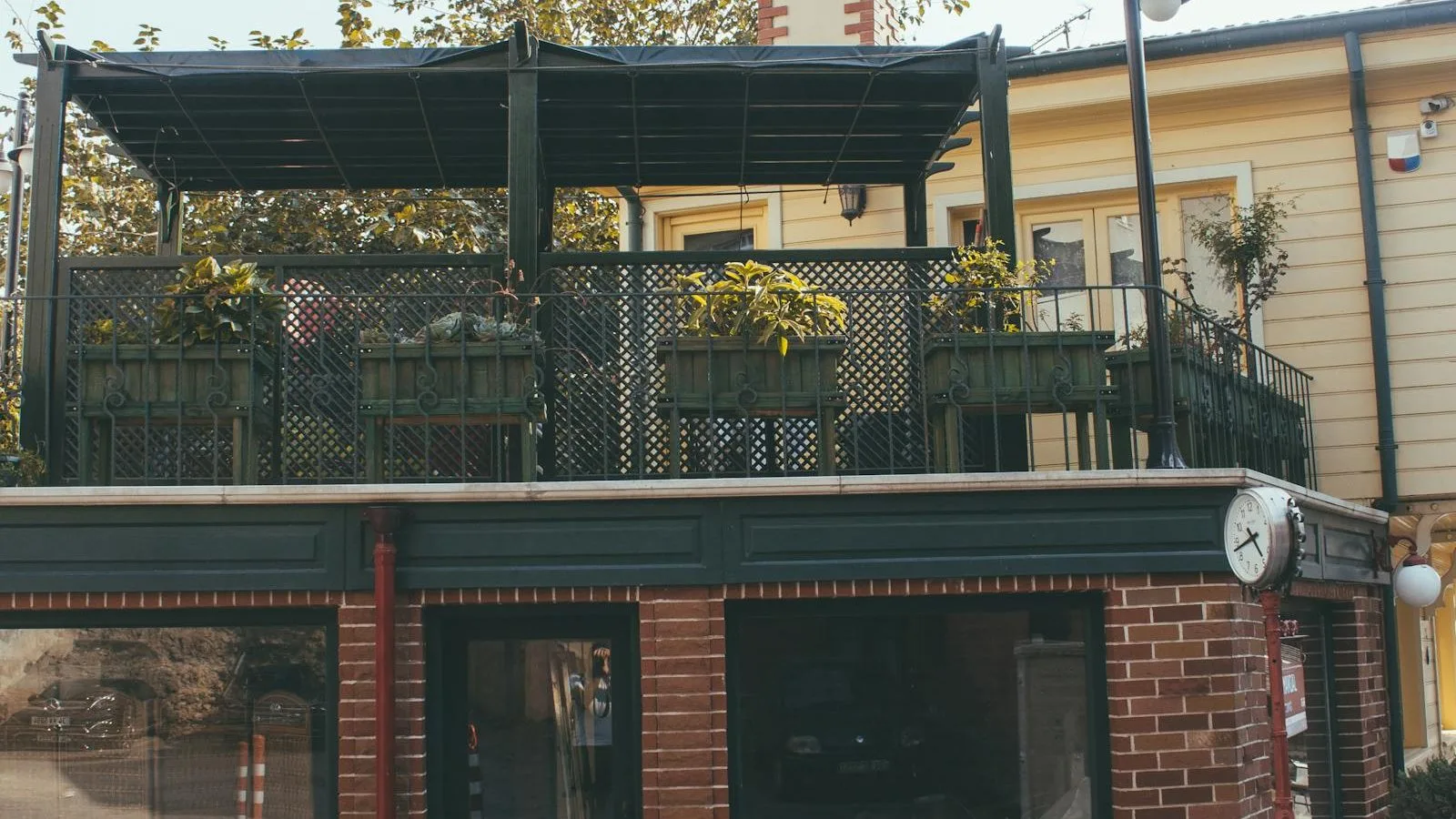
Five years ago, “interior design studio in Kosovo” was a search term used almost exclusively by the diaspora. In 2026 it is a category that increasingly shows up in the procurement processes of Munich finance executives, Berlin tech founders, Zurich family offices and Vienna investors. The reason is structural, not fashion. Kosovo-based studios deliver design and 3D visualisation at parity with leading DACH studios, in four languages, at fees that typically run 40 to 60 percent below the equivalent Munich or Zurich quote. This guide explains how the model works, why international clients choose it, and what to look for when evaluating a studio.
The 40 to 60 percent cost advantage at equivalent quality
The cost difference between a Kosovo-based studio and a comparable Munich or Zurich studio is not a quality compromise. It is the result of two structural factors: lower office and overhead costs in Prishtinë (rent, utilities, business taxes are roughly 25 to 35 percent of Munich equivalents), and lower salary base for equivalent talent (a senior interior designer in Prishtinë earns 30 to 50 percent of a Munich peer, while delivering the same software output).
The output itself is the same because the tools are the same. AutoCAD, Revit, SketchUp, 3ds Max, V-Ray, Twinmotion, Adobe Creative Suite — these are the standard professional toolset across the European industry, and Kosovo’s leading studios train and certify on them at the same level as their DACH peers. Many senior designers in Prishtinë studied or worked in Vienna, Munich, Milan, Zurich or London before returning. The pipeline is European, the cost base is Kosovan, and the client gets the difference.
For a 150 m² luxury apartment renovation, the practical fee comparison looks like this:
- Munich studio: design fees 50,000 to 80,000 euros
- Zurich studio: design fees 60,000 to 95,000 euros
- Vienna studio: design fees 38,000 to 65,000 euros
- Berlin studio: design fees 35,000 to 60,000 euros
- Senior Prishtinë studio: design fees 22,000 to 38,000 euros
The saving is rarely the only argument for the client, but it is what reframes the conversation. With 25,000 to 50,000 euros redirected from design fees to materials, the project usually upgrades two finish categories — for example, real natural stone instead of porcelain stoneware, or full bespoke joinery instead of high-end modular.
Multilingual teams: English, German, Albanian, Italian
The language depth in Kosovo’s senior studios is unusual by European standards. A meaningful share of Kosovars studied or worked for years in Germany, Austria and Switzerland; many returned to Prishtinë in their 30s and 40s with native-level German and continued contracts in DACH. Italian is similarly common, driven by Italy’s long economic and educational ties with Kosovo. English is the working language of the industry across the country.
The practical effect is that a senior project lead in Prishtinë can run a client meeting with a German-speaking owner, a kitchen presentation with an Italian supplier, and a contractor coordination call with an Albanian-speaking site team — in a single afternoon, without translation. Few Western European studios match this depth.
DACH project experience
The leading Kosovo studios have built up serious DACH track records over the past decade. Initial demand came from the Kosovan diaspora — second-generation families in Munich, Zurich, Vienna and Düsseldorf renovating apartments and houses — and expanded from there into expat clients, local owners introduced by referral, and increasingly direct international procurement.
For any prospective client, the right question is not whether Kosovo studios deliver in DACH (they do) but whether the specific studio you are speaking with has a verifiable track record in your city. Three to five completed projects with addresses, photographs and contactable client references is the minimum standard. The German interior architects association (bdia) is one useful reference point for the broader European industry standards a Kosovo studio should be matching.
Strong supplier networks across the Balkans and DACH
Kosovo sits within the European supplier ecosystem and outside the EU customs union — which sounds like a complication and is actually an advantage. Studios that work cross-border routinely manage:
- Direct sourcing from Italian, German and Austrian premium furniture brands (Minotti, Cassina, B&B, Bulthaup, Walter Knoll, Vitra)
- Bespoke joinery from Kosovo, Albania and North Macedonia at 30 to 40 percent of equivalent Italian or German fabricator pricing, with delivery and installation across DACH
- Natural stone from Croatian, Italian and Kosovan quarries
- Local DACH installation partners for kitchens, sanitary, electrical and plastering, contractually managed by the studio
For high-value bespoke joinery in particular, the Kosovo and Albanian fabricator network has become a meaningful supply route for Western European luxury projects, with quality at parity with the leading South Tyrolean and Bavarian workshops at significantly lower cost.
On-site supervision: how it works
The most common operational concern from international clients is supervision. The model used by the leading Kosovo studios is hybrid:
- The studio’s own project lead attends every key milestone in person — typically four to eight visits across a 100 to 250 m² residential project
- A named local supervisor (often a partner architect or quantity surveyor in the project city) handles weekly site inspections, weekly photo reports and direct contractor coordination
- Daily digital communication runs through the agreed project management stack (Notion, Trello, weekly Zoom)
- The local supervisor’s name, qualifications and contact details appear in the client contract from day one
This model is now used by hundreds of multilingual European studios — not just Kosovan — and is the operational standard for cross-border luxury delivery in 2026.
Success stories: what the model delivers
Three condensed examples of Kosovo studio delivery into DACH:
165 m² Altbau in Munich Lehel. Strip-and-renovate by a Swiss-American family relocating from Zurich. Total project cost 720,000 euros, of which design fees 31,000 euros. Comparable Munich studio quotes: 58,000 to 78,000 euros design. Project ran 11 months from contract to handover. Outcome: redirected saving funded full Calacatta marble bathrooms and bespoke walnut joinery throughout.
140 m² Gründerzeit in Vienna 7th district. Pied-à-terre for a Middle East family. Total project cost 540,000 euros, of which design fees 26,000 euros. Project ran 9 months including listed-building approval. Outcome: full restoration of original Tafelparkett and stucco, restored fabric wall coverings in the salon, contemporary kitchen behind concealed joinery.
220 m² Neubau penthouse in Berlin Mitte. Permanent residence for a US tech founder. Total project cost 880,000 euros, of which design fees 38,000 euros. Project ran 8 months. Outcome: full open-plan reconfiguration, integrated lighting design, custom Italian upholstery package.
How to evaluate a Kosovo studio before signing
The evaluation checklist is the same as for any European studio with one Kosovo-specific addition:
- Documented portfolio of at least ten completed projects in your category
- Three to five contactable client references, ideally including one international client in your city
- Professional liability insurance with proof
- Fixed-price written proposal with itemised deliverables
- Named project lead and named local supervisor in your city
- Documented digital workflow demonstrated in the first meeting
- Milestone-tied payment schedule (no more than 30 percent upfront)
- Company registration with Kosovo Business Registration Agency (ARBK) and verifiable VAT number
Why this matters in 2026
Cross-border professional services are no longer the exotic option in European luxury interior design. The infrastructure — multilingual teams, photorealistic 3D, video conferencing, milestone-based contracts, hybrid supervision — is now standard. The studios using it well deliver at quality parity for materially less money, and the share of DACH luxury apartment work going to Balkan studios is rising every year.
Doyenne is a multidisciplinary studio based in Prishtinë, Kosovo, combining interior design, architecture, 3D visualisation and on-site supervision under one roof. Our team operates in English, German, Italian and Albanian, with extensive project experience across Kosovo, Albania, Germany, Austria and Switzerland. We deliver fixed-price, milestone-based projects on the same workflow whether the site is in Prishtinë or Munich. If you are considering a Kosovo-based studio for a European project, book a no-obligation consultation.
Want to see comparable work? Explore our portfolio or read about our full service offering.


