Most interior design mistakes are not exotic. They are the same ten errors, repeated by client after client, project after project, in every European city. The good news: they are almost all fixable, and most of them can be avoided entirely with proper planning. This is the European studio guide to the ten that come up most often, with the concrete fix for each.
1. Oversized furniture in undersized rooms
The most common mistake by some margin. Showrooms are huge; living rooms are not. A 240 cm sofa with two side chairs and a coffee table needs roughly 22 m² to sit comfortably. In a 16 m² Berlin Altbau living room, the same furniture overwhelms everything.
Fix: measure the room, draw the layout in 2D, walk through it in 3D, and specify furniture dimensions only after the layout is signed off. A good interior designer does this as the first concrete deliverable.
2. No real lighting plan
A single ceiling pendant in the middle of a 25 m² living room is not a lighting plan. Neither is a grid of identical downlights. The result is flat, hard, unfriendly light that makes the entire interior feel cheaper than the materials cost.
Fix: a layered plan with ambient, task and accent lighting on at least two switched circuits per room, all dimmable. Plan it before electrical first-fix, not after the walls are closed.
3. No budget for textiles
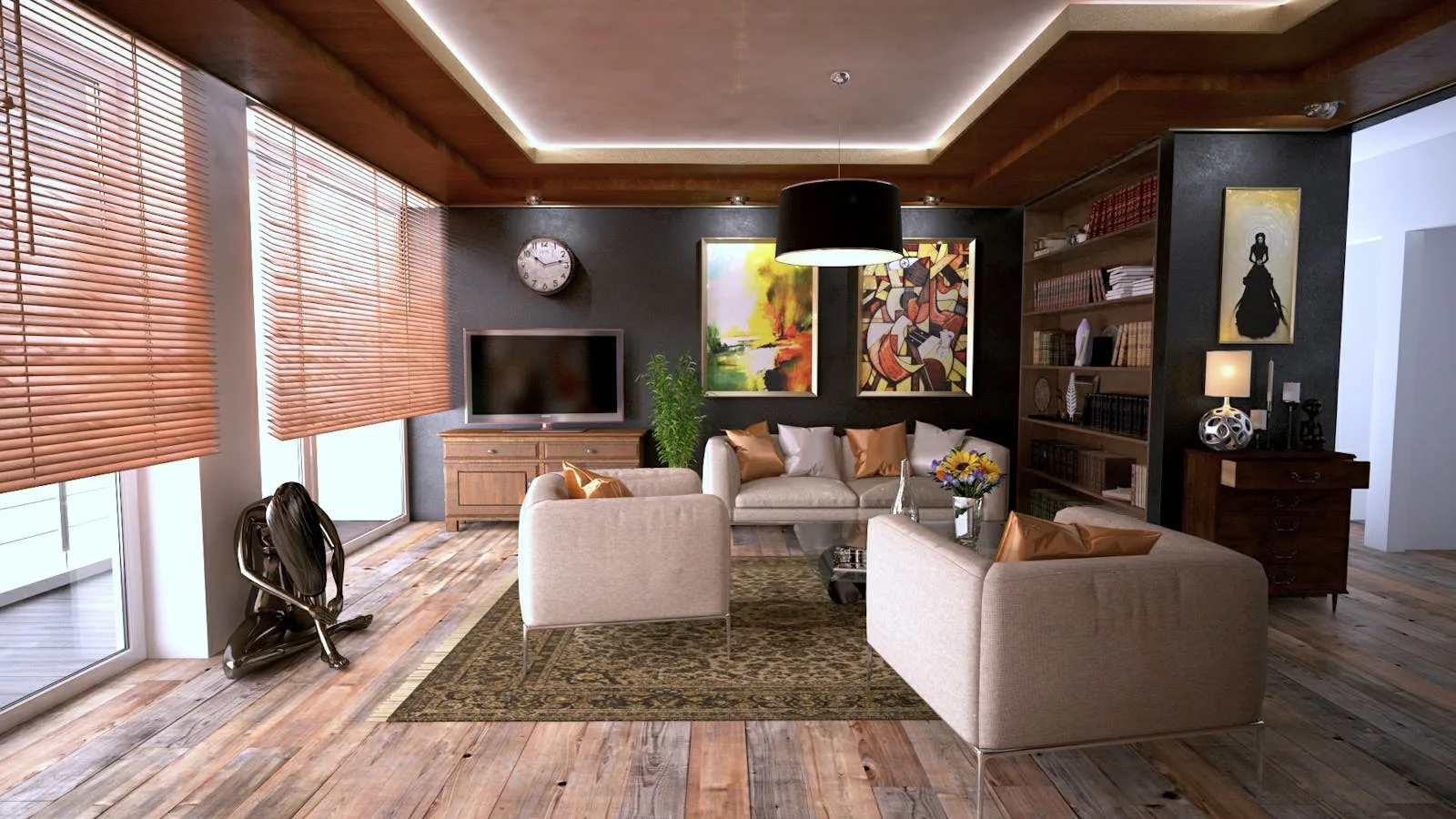
Curtains, rugs, cushions and throws routinely get squeezed at the end of the project when the budget is exhausted. The result is a furnished room that never feels finished — no softness, no acoustic warmth, no visual rhythm.
Fix: ring-fence 8 to 15 percent of the total furnishing budget for textiles from day one and protect it. Specify and order textiles in parallel with furniture, not after.
4. Scale and proportion errors
A coffee table too small for the sofa. A pendant too low for the dining table. A console too short for the entryway. Each error individually is small; together they make a room look uncoordinated.
Fix: 3D visualisation before purchase. Renderings catch every scale issue while it is still cheap to swap a SKU. Studios that include photorealistic 3D as standard reduce post-delivery scale problems by roughly 60 percent.
5. Mono-colour rooms with no tonal variation
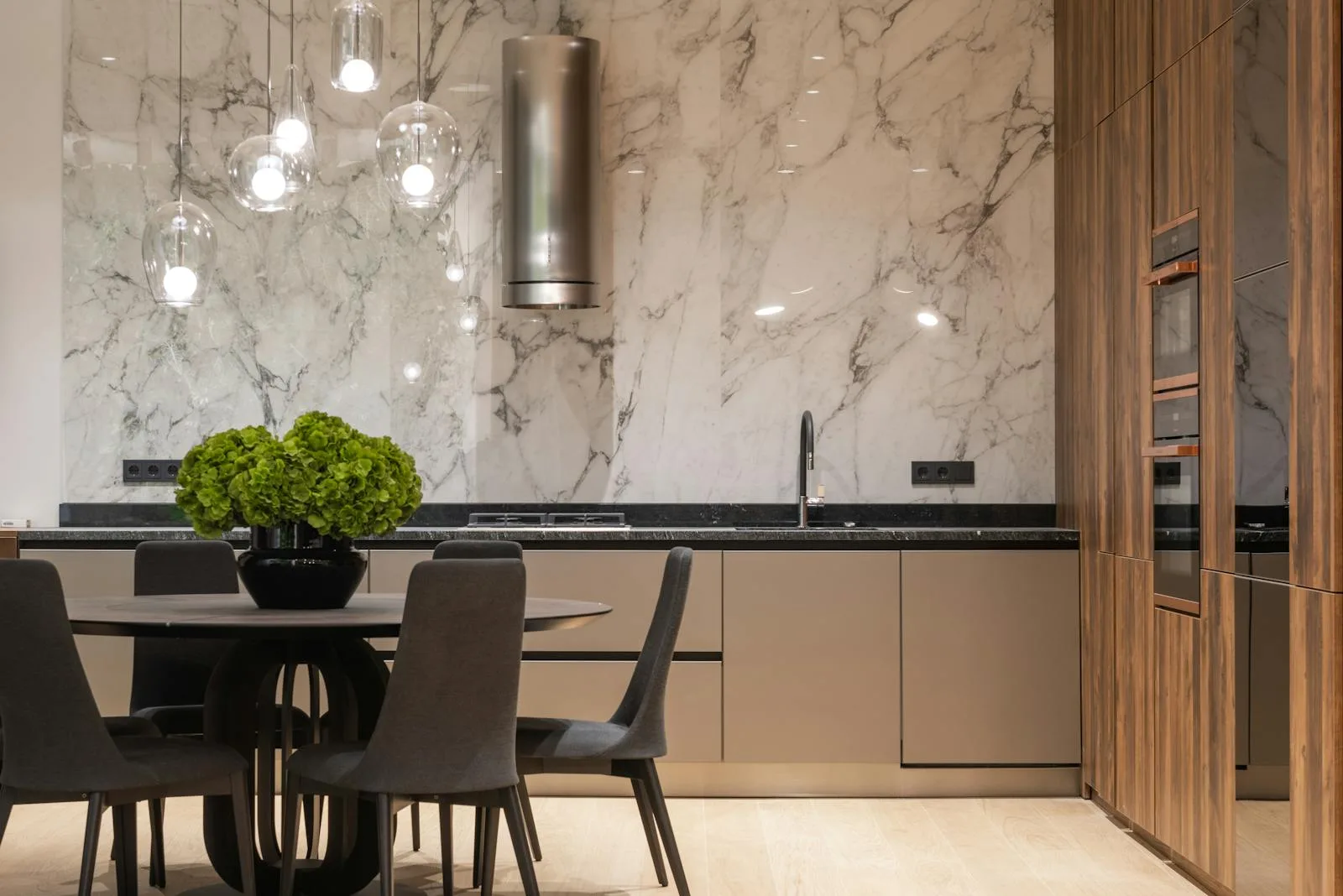
The all-beige room, the all-grey room, the all-white room. The instinct is calmness; the result is flatness. Without tonal variation, even an expensive material palette reads as monotonous in photographs and dull in person.
Fix: within the chosen palette, build at least three tonal steps and three textures — for example, in a warm-white room, plaster walls, oak floor, linen upholstery, brushed brass hardware, and a wool rug.
6. Wrong rug size
A 160 by 230 cm rug under a 240 cm sofa floats in the middle of the room and visually shrinks everything. Rugs are an architectural element, not an accessory.
Fix: the rug should sit at minimum under the front legs of all major upholstery. For most living rooms 240 by 340 cm or 300 by 400 cm is the right starting size. Under a dining table, the rug should extend at least 60 cm beyond the table edge on every side.
7. Ignoring acoustics
Modern open-plan apartments with hard floors, glass and plaster surfaces routinely measure reverb above 0.8 seconds — a level at which conversation becomes tiring within minutes and TV dialogue is hard to follow.
Fix: soft furnishings, curtains, area rugs, upholstered furniture, and where required acoustic ceiling panels. For more on industry-standard residential acoustic targets, the German interior architects association (bdia) publishes guidance worth reviewing for any high-end residential brief.
8. Bad outlet placement
The cheapest thing to get right at first-fix and the most expensive thing to fix later. Outlets in the wrong places — too few behind the sofa, missing on one side of the bed, none for the dining table floor lamp — quietly limit how the space can be used for years.
Fix: plan outlets in 3D before electrical first-fix. Both sides of every bed, both sides of every desk, behind every sofa, switched outlets behind dining tables for floor lamps, integrated USB-C where appropriate. Add 30 percent more than you think you need.
9. Buying materials online without samples
Stone slabs, wood floors, paint colours, fabric upholstery — none of them look the same on a screen as they do in your apartment under your light. Online-only purchasing of structural materials is one of the most expensive mistakes an unsupervised renovation can make.
Fix: always order physical samples before specifying. View samples in the actual room at different times of day. For natural stone, inspect the actual slab before purchase, not a photograph of a different slab from the same quarry.
10. Skipping 3D visualisation
The final mistake compounds all the others. Without photorealistic 3D before construction begins, every problem on this list is harder to spot and more expensive to fix.
Fix: insist on photorealistic 3D as a standard part of the design process — not a paid upgrade. A serious studio includes 12 to 30 renderings for a 100 to 150 m² apartment and at least two rounds of iteration. The change-request reduction during construction (roughly 60 percent) easily justifies the cost.
The pattern behind the ten mistakes
Read the ten mistakes again and you will notice the same root cause: most of them happen because decisions were made too late, in the wrong order, or with too little visual evidence. The structural fix is simple — plan in 3D, plan the lighting at first-fix, plan textiles into the original budget, plan outlets before walls are closed, and order samples before signing off materials. The studios that do these five things consistently produce results that look polished without exception. The studios that don’t are the ones whose work always feels a half-step short.
Doyenne is a multidisciplinary studio based in Prishtinë, Kosovo, combining interior design, architecture, 3D visualisation and on-site supervision under one roof. Every project we deliver runs through photorealistic 3D before construction, with layered lighting plans, ring-fenced textile budgets and outlet placement set at the design stage. If you want a project that avoids the ten mistakes by design, book a no-obligation consultation.
Want to see comparable work? Explore our portfolio or read about our full service offering.