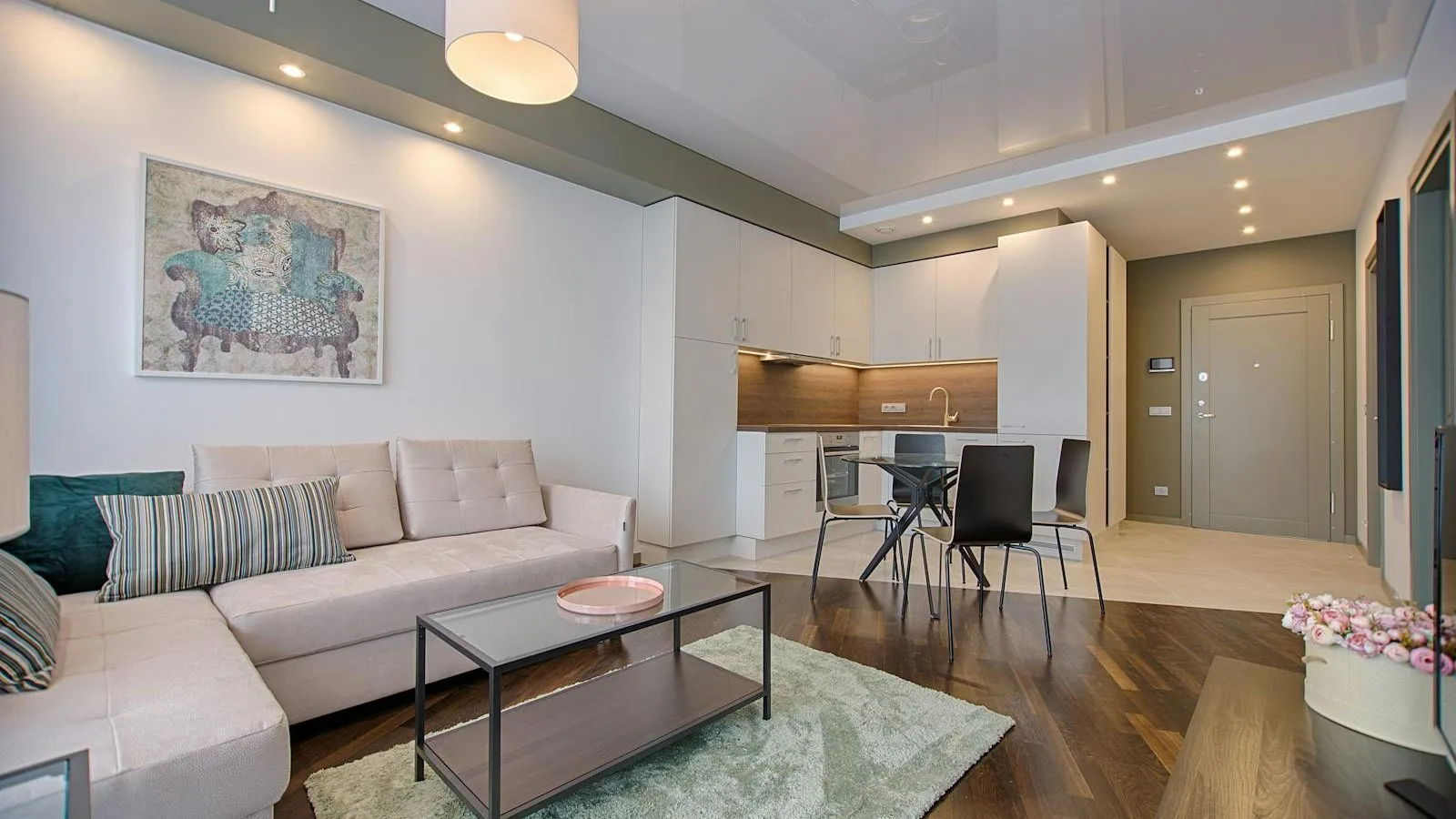
“Luxury” is the most over-used word in the interior design industry. Almost every studio with a polished website now describes its work as luxury, premium, or high-end, and the number itself — what luxury actually costs in 2026 — is rarely published anywhere. This guide cuts through the marketing language. It sets out what genuinely makes interior design luxury rather than merely expensive, what European clients pay in real euros per square metre, where the budget actually goes line by line, and why discreet luxury can sometimes be achieved at mid-market price points if you choose the right studio. Written for clients planning serious projects in Europe — homeowners, developers, hospitality investors — not for browsing inspiration.
The four dimensions of genuine luxury
Real luxury in interior design is not a price band. It is the convergence of four dimensions, each of which has a specific cost. Strip out any one and the project is no longer luxury, regardless of budget.
1. Materials
Natural stone (not engineered look-alikes), solid wood (not veneer), real leather, hand-applied plaster, hand-finished metals, full-aniline upholstery leather, hand-knotted rugs. Each material is selected for how it ages — patinas, develops character, holds value — rather than for how it photographs new. The cost premium over mid-market materials runs 3 to 8 times per square metre.
2. Craft
Bespoke joinery built by named workshops; hand-applied finishes by specialist trades; the full set of small details that mid-market projects skip — properly sequenced grain on book-matched timber doors, hand-rubbed wax finishes, hidden fixings, mitred stone corners. Craft is invisible to a casual viewer and immediately obvious to a discerning one. It is also the line item where time-cost dominates: a hand-finished kitchen takes a senior cabinetmaker three to five times the hours of a CNC-cut equivalent.
3. Service
Extended consultation, multiple iteration cycles, full on-site supervision through every trade, art and accessories curation, soft launch styling, and aftercare visits in the year following completion. Luxury studios spend more hours per square metre on each project — typically 1.5 to 2.5 hours per m² for design alone, against 0.5 to 1 hour at mid-market level. That hour count is the single largest driver of fee variance between luxury and mid-market studios.
4. Time
Luxury work cannot be rushed. The bespoke joinery workshop has a 12 to 16 week lead time; the stone yard has an 8 to 14 week fabrication queue; the hand-finished plaster takes 5 to 7 days per layer to cure. Clients who want a luxury result on a mid-market timeline either compromise the materials, compromise the craft, or pay heavy expediting premiums that erode value. Genuinely luxury studios will refuse projects that try to compress these timelines — a useful filter in itself.
The 2026 European price bands
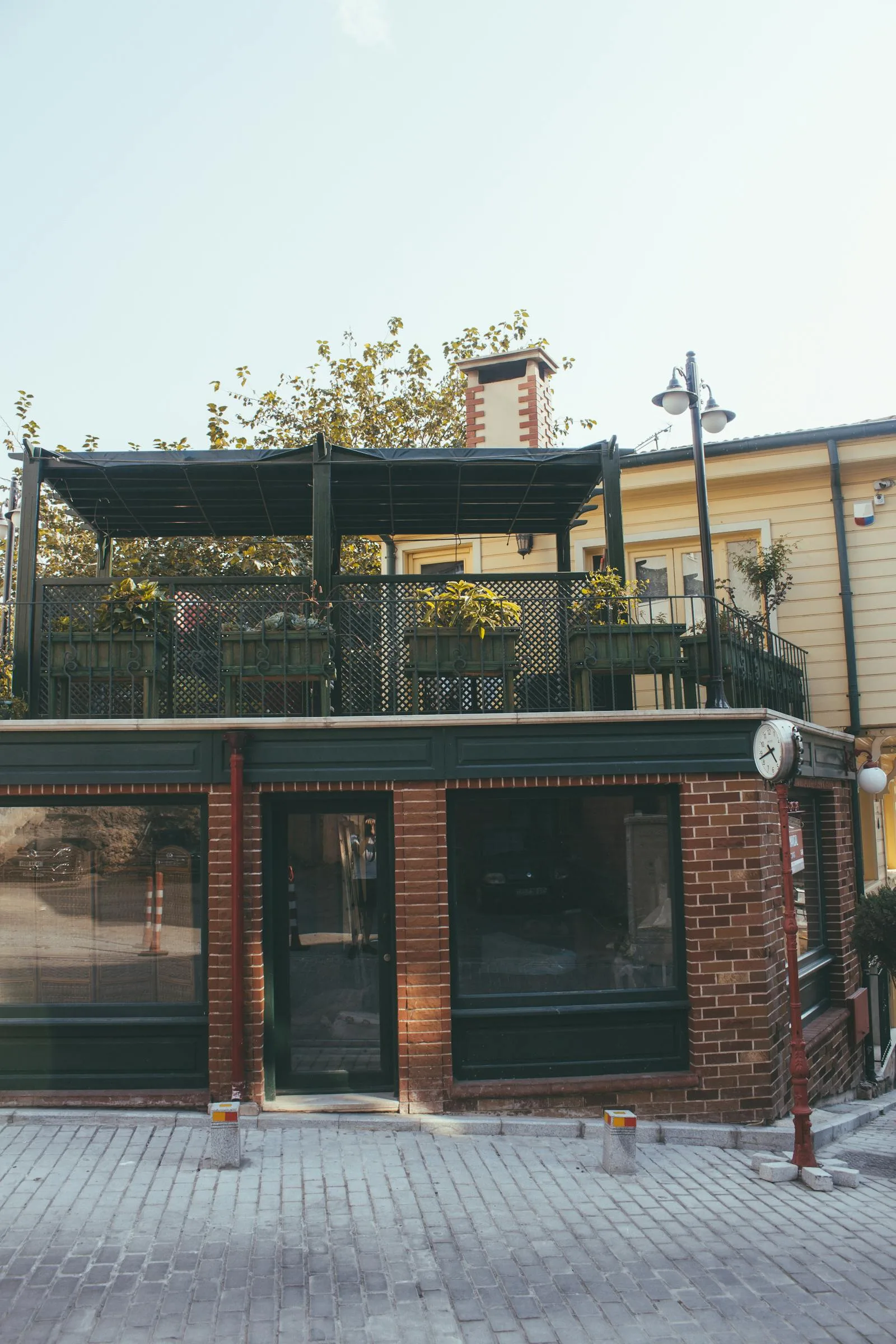
The numbers below cover total project cost (design plus construction plus furniture) per square metre, for European residential interiors in 2026. Hospitality and retail luxury follow similar logic but on different per-key or per-seat metrics.
- Mid-market: 1,500 to 3,000 euros per m² — well-considered, professionally designed, sound materials, no bespoke
- Upper-mid market: 3,000 to 5,000 euros per m² — selective bespoke joinery, some natural stone, designer lighting, full supervision
- Discreet luxury: 5,000 to 8,000 euros per m² — extensive bespoke, hand-finished elements, signature pieces, art curation begun
- Full luxury: 8,000 to 15,000 euros per m² — every element bespoke or signature, multiple natural stones, lighting design as art, dedicated curators
- Ultra-luxury / signature: 15,000 to 25,000+ euros per m² — uncompromised every line, signature designers, museum-grade art, often signature architecture as well
The bands sit on a continuum, not as discrete categories. Most genuinely luxury European projects in 2026 land in the 6,000 to 12,000 euro per square metre range. Above that, marginal cost rises faster than marginal experience — a 20,000 euro per square metre project does not feel “twice as luxury” as a 10,000 euro per square metre project, though both feel meaningfully different from a 4,000 euro per square metre project.
Where the budget actually goes
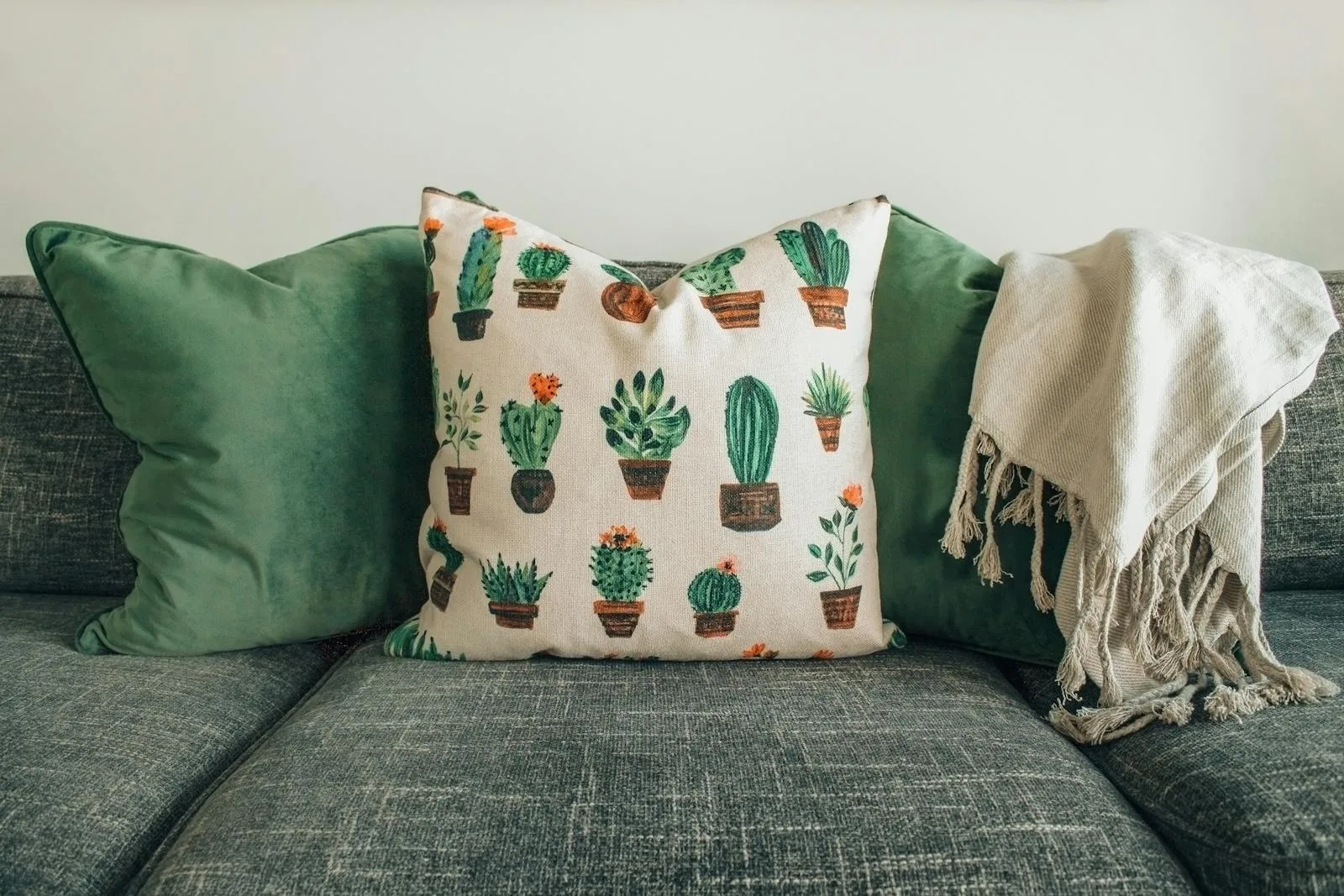
Luxury budgets are weighted differently from mid-market budgets. A typical 2026 European luxury residential project of 250 m² with a total budget around 2.5 million euros distributes roughly as follows.
- Bespoke joinery (kitchen, wardrobes, library, dressing room, bar): 35–45 percent — typically 875,000 to 1.1 million euros
- Natural stone, hardwood floors, signature finishes: 15–20 percent — 375,000 to 500,000 euros
- Lighting design and fixtures: 8–12 percent — 200,000 to 300,000 euros
- Art curation and accessories: 8–12 percent — 200,000 to 300,000 euros (excluding investment-grade purchases)
- Design fees and supervision: 12–18 percent — 300,000 to 450,000 euros
- Soft furnishing, technology, contingency: 10–15 percent — 250,000 to 375,000 euros
Note the relative position of lighting and art: each typically commands as much budget as the design fee itself. New luxury clients are almost always surprised by how much lighting matters in a serious project — the difference between a beautifully designed room with mediocre lighting and the same room with carefully designed lighting is the single largest perceptible quality lever in interior design.
The five line items that actually create the luxury feeling
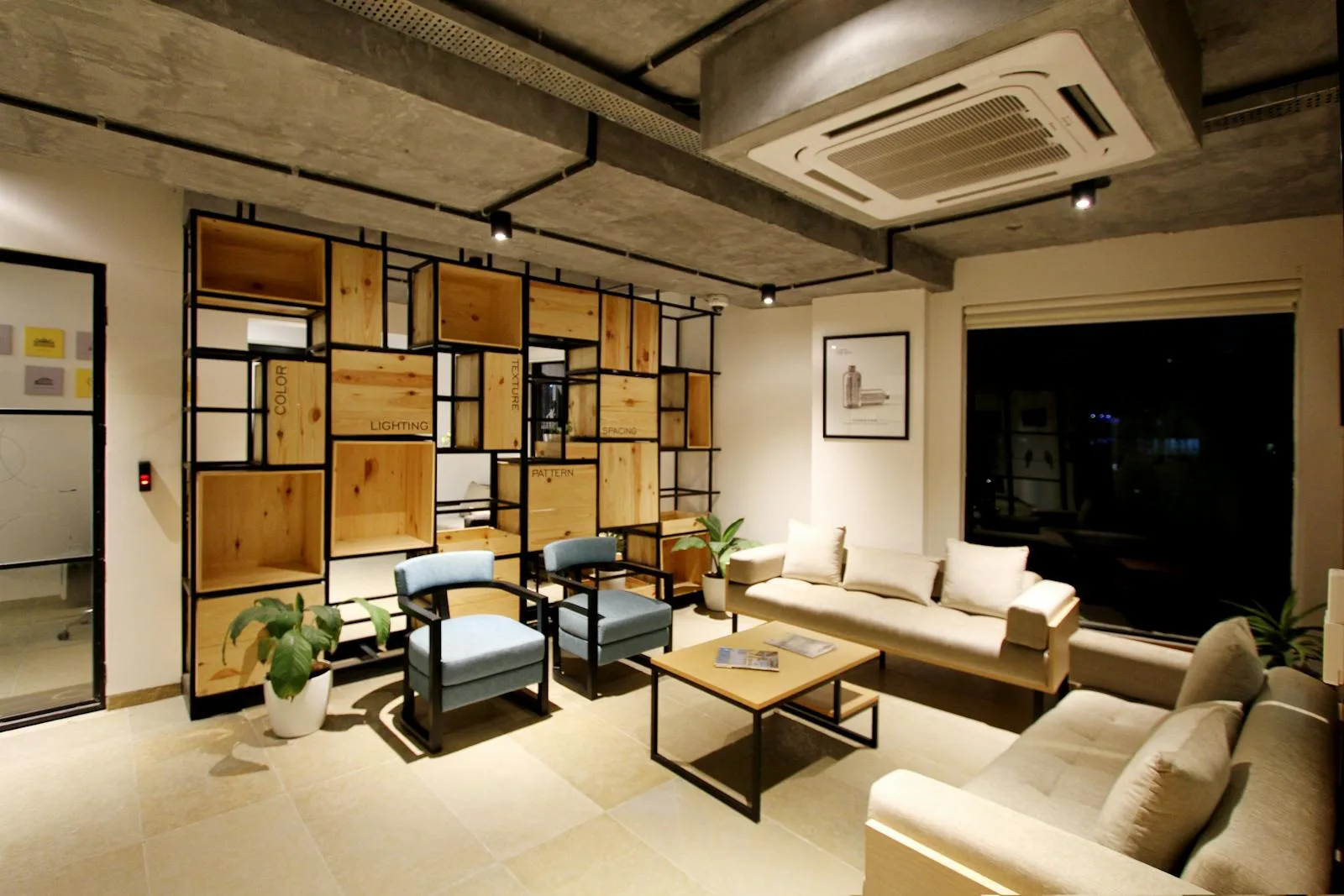
Three years of post-occupancy interviews with luxury clients give a consistent answer: most clients identify five specific elements that make their project feel luxury once they live in it. These are the lines worth protecting in the budget at all costs.
- The kitchen as architecture: bespoke cabinetry, integrated appliances, natural stone or solid timber worktop, considered island or bar — typically 80,000 to 250,000 euros for the kitchen alone
- The primary bathroom as a sanctuary: natural stone, integrated lighting, designer fittings, generous proportions — 50,000 to 150,000 euros
- Lighting designed in layers: ambient, task, accent, decorative — controlled by scene rather than switch — 60,000 to 200,000 euros
- One signature element: a stone wall, a bespoke staircase, a custom library, a curated art wall — 30,000 to 200,000 euros
- The dressing room or wardrobe system: integrated, lit, organised — 25,000 to 100,000 euros
If your budget cannot support all five at full luxury level, concentrate it on the three you will use most. A house with a luxury kitchen, luxury primary bathroom, and luxury lighting reads as a luxury house even with mid-market finishes elsewhere. The opposite is not true.
How luxury can be achieved at upper-mid prices
The most counter-intuitive finding from a decade of European luxury work: the studio’s overhead structure has more impact on final project cost than the materials themselves. A studio with 30-person staff in central Munich, Zurich, or London carries fixed overhead — rent, salaries, marketing — that lands on every project as a cost premium of 30 to 50 percent over an equivalent studio operating from a lower-cost European city.
For clients who care about the result rather than about the studio’s address, this opens a structural advantage. A 2,500 euro per square metre project delivered through a Central European studio can feel — and demonstrably hold up to scrutiny — at the level of a 4,000 euro per square metre project delivered through an equivalent Western European studio. The materials are the same (sourced from the same European suppliers); the joinery workshops are equivalent; the design quality is identical. The difference is studio overhead.
This is not a “cheap” luxury argument. It is an arithmetic one. A serious Kosovo, Albanian, or Polish studio working with the same European supply chain delivers genuinely luxury work at a price that reads as upper-mid market in Munich or London. The studios that win these projects are the ones with documented international portfolios, full English-language project management, and signed contracts with the same supplier networks used by their Western European peers.
Three case examples
Anonymised but real, all completed in the past two years.
Case A: 220 m² apartment, Munich
Total project cost 1.84 million euros (8,360 euros per m²). Bespoke kitchen by named Bavarian workshop (185,000 euros). Two natural-stone bathrooms (130,000 euros). Lighting design with 220 individually programmed fixtures (165,000 euros). Curated art wall featuring three contemporary German painters (240,000 euros). Design and supervision fee 280,000 euros. Project duration 13 months from contract.
Case B: 380 m² villa, Tirana
Total project cost 1.62 million euros (4,260 euros per m²). Bespoke joinery throughout — kitchen, wardrobes, library, bar, dressing room — built in regional workshops to specifications equivalent to Munich tier (510,000 euros). Italian travertine and Albanian limestone (290,000 euros). Custom lighting (140,000 euros). Curated regional art collection (95,000 euros). Design fee 220,000 euros. Project duration 11 months.
Per square metre cost roughly half of Case A. Material grade and finish quality were independently audited as equivalent. The difference is studio overhead and labour cost — same European supply chain, different geography.
Case C: 16-room boutique hotel, Vienna
Total project cost 4.4 million euros (275,000 euros per key). Bespoke joinery in every room category (1.6 million euros). Three signature stone bathrooms in suite category (310,000 euros). Custom lighting throughout — every common area treated as designed lighting installation (480,000 euros). Curated Austrian contemporary art programme (220,000 euros). Design and supervision fee 620,000 euros. Project duration 18 months.
Sustainability as the new luxury signal
The fastest shift in European luxury interior design over the past five years is the integration of sustainability into the luxury definition itself. Certified materials are no longer the “ethical alternative” to luxury — they are increasingly the marker that distinguishes serious luxury from merely expensive work.
- FSC-certified hardwoods for floors, joinery, and structural timber
- Cradle to Cradle certified finishes for paints, plasters, and surface treatments
- EU Ecolabel for upholstery, textiles, and rugs
- Reclaimed and refurbished pieces integrated alongside bespoke new work — rare antique furniture, period architectural details, salvaged stone
- Regional sourcing with documented supply chain — limiting embodied carbon and supporting regional craft economies
- Embodied carbon transparency — material-level lifecycle reporting, increasingly requested by clients in Germany, Switzerland, and Scandinavia
The investment logic is straightforward: certified sustainable luxury work holds resale value measurably better than uncertified luxury work in markets where this transparency is now expected. For clients planning luxury projects with a 10 to 20 year horizon, sustainability is no longer optional — it is part of the value definition.
How to tell genuine luxury from premium-priced marketing
Three diagnostic tests separate real luxury studios from those that have learnt the visual language without delivering the substance.
- The supplier list test. Ask the studio to name the workshops, stone yards, lighting suppliers, and trade specialists they work with. Real luxury studios have long-standing relationships with named suppliers and will share them. Marketing-only studios use vague language like “premium European suppliers”
- The reference test. Ask for two contactable past clients in the same price band as your project. Call them. Ask: was the schedule kept? Was the budget kept? Did the studio accept responsibility when something went wrong? The answers separate operators from marketers very quickly
- The proposal test. A real luxury proposal runs to 30 to 60 pages with detailed scope, named suppliers, sample materials, indicative timelines, and an itemised fee. Glossy 8-page proposals are typically marketing documents, not commercial commitments
For broader context on the European luxury market more generally — including how luxury spending across home and lifestyle categories is evolving — the regularly updated Statista furniture and living market data remains a useful external reference for clients tracking sector shifts year on year.
What luxury really costs — and what it actually buys
Strip away the marketing language and luxury interior design buys four things: better materials that age well, real craft that holds value, the time and service to do it properly, and the integrated planning that makes the result feel inevitable rather than assembled. The cost reflects all four. Where the cost is unnecessarily high — through studio overhead rather than through what reaches the client — clients now have credible alternatives. The genuinely luxury European market is increasingly defined less by the studio’s postcode and more by the supply chain it can deliver and the supervision intensity it can sustain.
Doyenne is a multidisciplinary studio based in Prishtinë, Kosovo, combining interior design, architecture, 3D visualisation, and on-site supervision under one roof. We deliver luxury and upper-mid residential and hospitality projects for clients across Kosovo, Albania, and the German-speaking region — sourcing from the same European supply chain as Munich, Vienna, and Zurich studios, at a cost structure 30 to 50 percent below comparable Western European fees. Over 230 completed projects, a multilingual team, and a transparent supplier list mean we can have a substantive conversation about your project on the first call. Request a no-obligation initial consultation and we will return an itemised proposal with named suppliers within seven working days.
Want to see comparable work? Explore our portfolio or read about our full service offering.